Start With How You'll Actually Use It
Before you measure anything or call a contractor, think through how you actually want to use your backyard. A family that needs a dining table, chairs, and a grill station is planning a different patio than someone who wants a fire pit area, a hot tub pad, or space for kids to play. What you do on it drives the size, the shape, and even the finish type.
It helps to sketch it out — even on paper. Picture your furniture in the space with everything pulled out and in use. That's the real size you need, not the theoretical minimum that technically fits.
Don't Undersize It
The most common thing homeowners say after a new patio is that they wish they'd gone a little bigger. It's easy to underestimate how much space disappears once you factor in a table with chairs pulled out, clearance around a grill, and room to actually walk around. A good rule of thumb: take your initial mental estimate and add two to three feet in each direction.
Extending concrete after the fact is expensive and never looks quite as clean as pouring it right the first time. Plan for the space you want to live in, not the smallest version that seems reasonable.
Understand Your Finish Options
North Texas summers are hard on outdoor surfaces, so the finish you choose has to hold up to heat, sun, and heavy rain. A standard broom finish is the most common choice — slip-resistant, low maintenance, and durable. It's not flashy, but it works and it lasts.
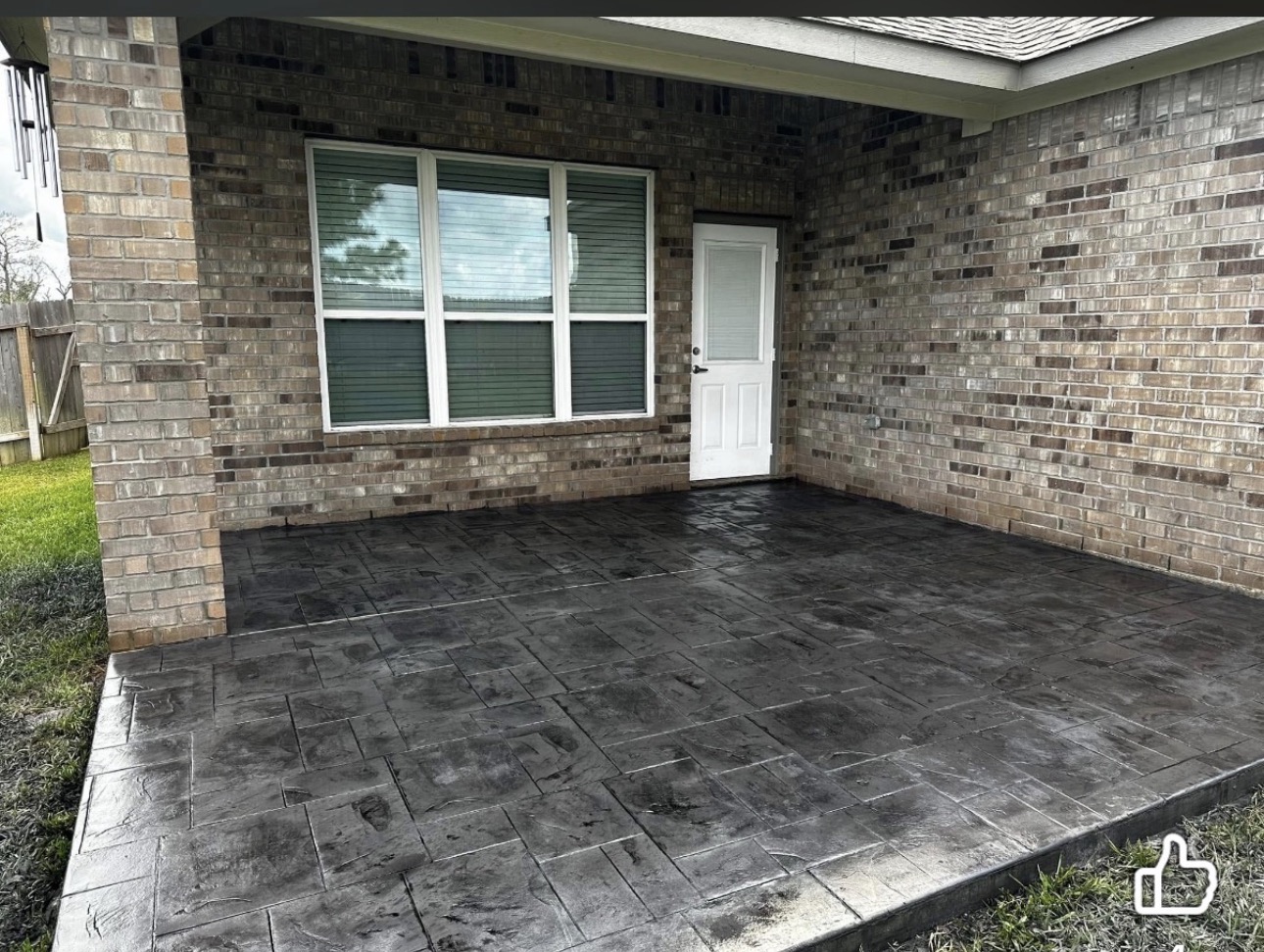
Stamped concrete adds pattern and texture that can mimic stone, slate, or brick. It looks great when it's done right, but it requires sealing every few years and can show wear over time if that maintenance is skipped. Exposed aggregate splits the difference — a natural stone-flecked surface that's textured without needing the upkeep of stamped. Ask your contractor to show examples of all three in real DFW conditions before you decide.
Plan for Water Runoff
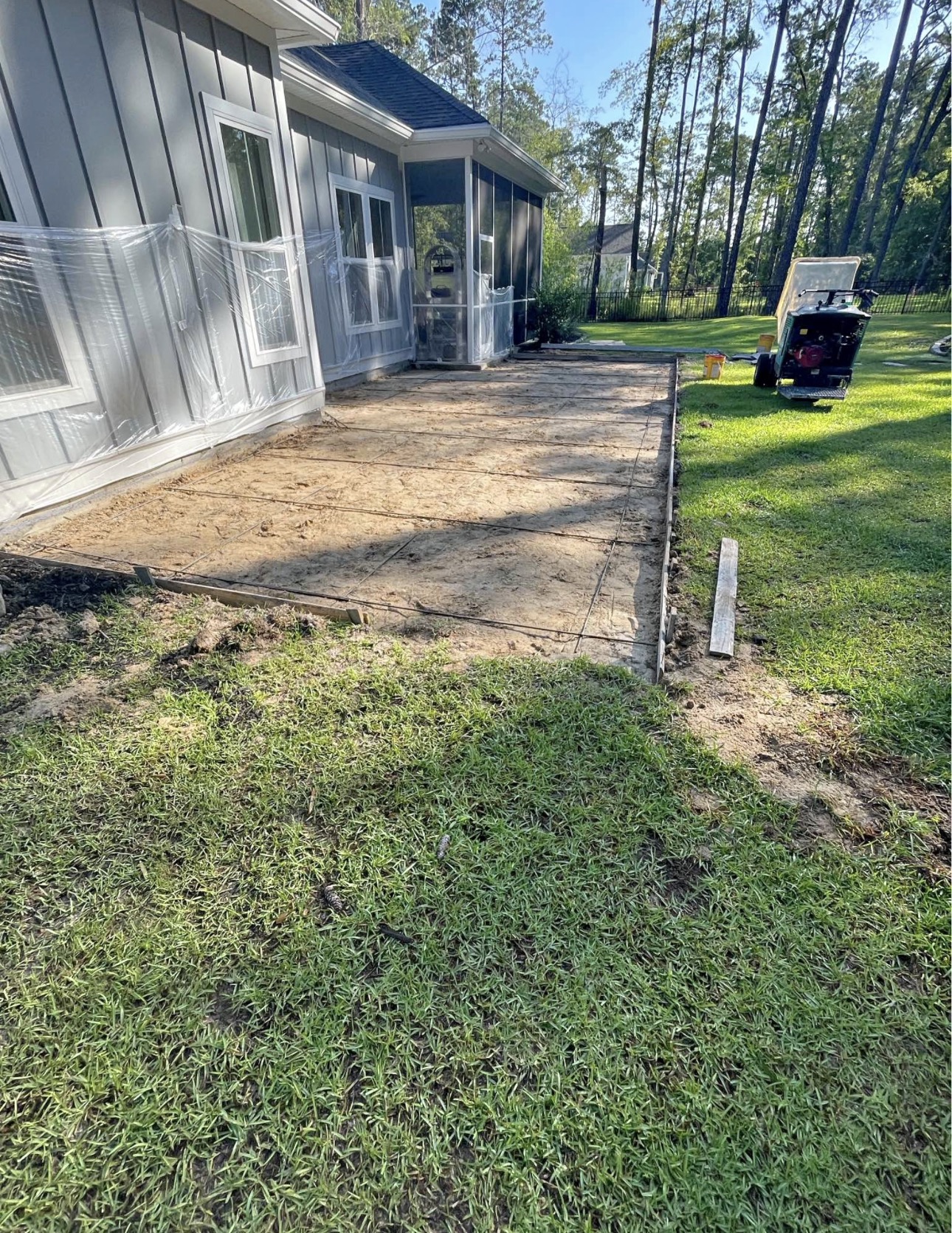
North Texas clay soil drains slowly, and when summer thunderstorms roll through DFW, they dump a lot of water fast. A patio with no drainage plan is going to have problems — standing water, erosion along the edges, and in the worst cases, water running toward your foundation. Your contractor should grade the slab with a slight slope so water moves away from the house naturally.
If your yard already has drainage issues, bring it up early in the conversation. Some sites need French drains, additional base material, or regrading work before any concrete goes in. Getting that sorted before the pour is far cheaper than dealing with the aftermath.
Control Joints Are Not Optional
Concrete expands and contracts with temperature swings, and DFW temperature swings are significant — from summer highs above 100°F to winter lows that occasionally dip below freezing. Control joints are cuts made into the slab that give it a predictable place to crack if it ever does. Without them, cracks show up wherever the concrete decides, which is usually the worst possible spot.
Expansion joints go between your slab and any fixed structure — the house, a fence post, steps, or a retaining wall. A contractor who doesn't bring up joint placement during the planning conversation is one who's cutting corners on something that directly affects how long your patio holds up.
Pick the Right Time of Year
Spring and fall are the best windows for concrete pours in North Texas. Moderate temperatures give the slab time to cure properly without fighting the heat. Summer pours are possible, but they require more attention from the crew — early morning starts, sun protection, and active hydration management to prevent surface cracking.
If you're planning a project for spring, start the contractor conversation in late winter. Demand for concrete work follows the same seasonal pattern as the weather, and locking in a crew early usually means you're at the top of the schedule — not waiting two months for a slot.