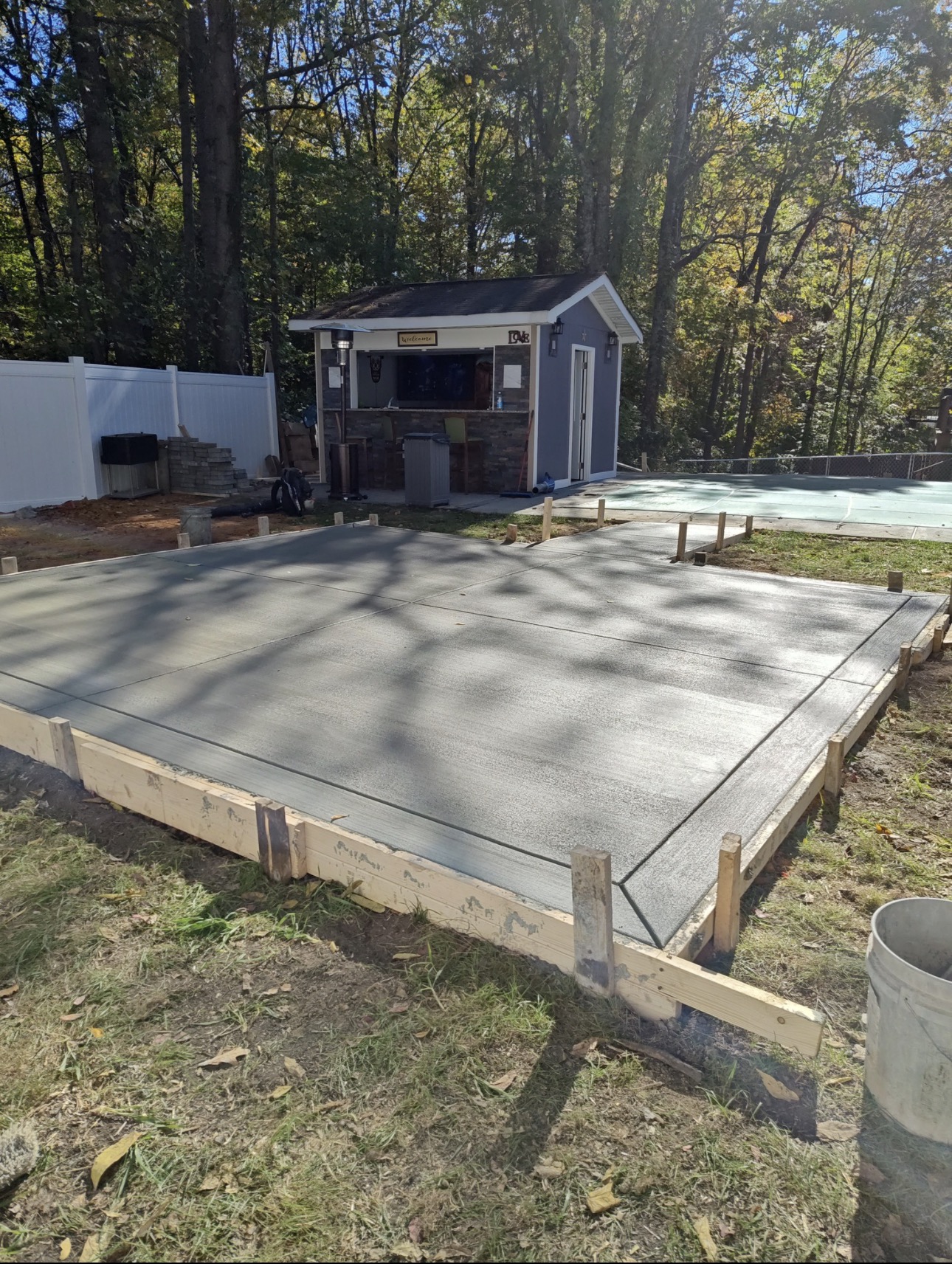
Curing and Drying Are Not the Same Thing
Most people assume concrete works like paint — pour it, let it dry, done. That's not how it works. Concrete cures through a chemical process called hydration, where cement reacts with water to form the crystalline structure that gives concrete its strength. That reaction takes time and needs moisture to complete. If concrete dries out too fast, the process gets cut short and you end up with a weaker slab.
The surface might feel solid within a few hours of a pour, but surface hardness is not the same as structural strength. The real strength builds over days and weeks underneath.
The Basic Timeline
For most residential concrete — driveways, patios, walkways — the curing schedule follows a predictable pattern. In the first 24 to 48 hours, the surface firms up enough to walk on carefully with foot traffic, but it's still fragile. By the end of day 7, the slab has typically reached around 70 percent of its full design strength. At 28 days, a properly poured slab hits its full rated strength.
These numbers assume reasonable conditions. In extreme heat, high wind, or an unusual cold snap, the timeline shifts. That's why the environment during and immediately after a pour matters almost as much as the mix itself.
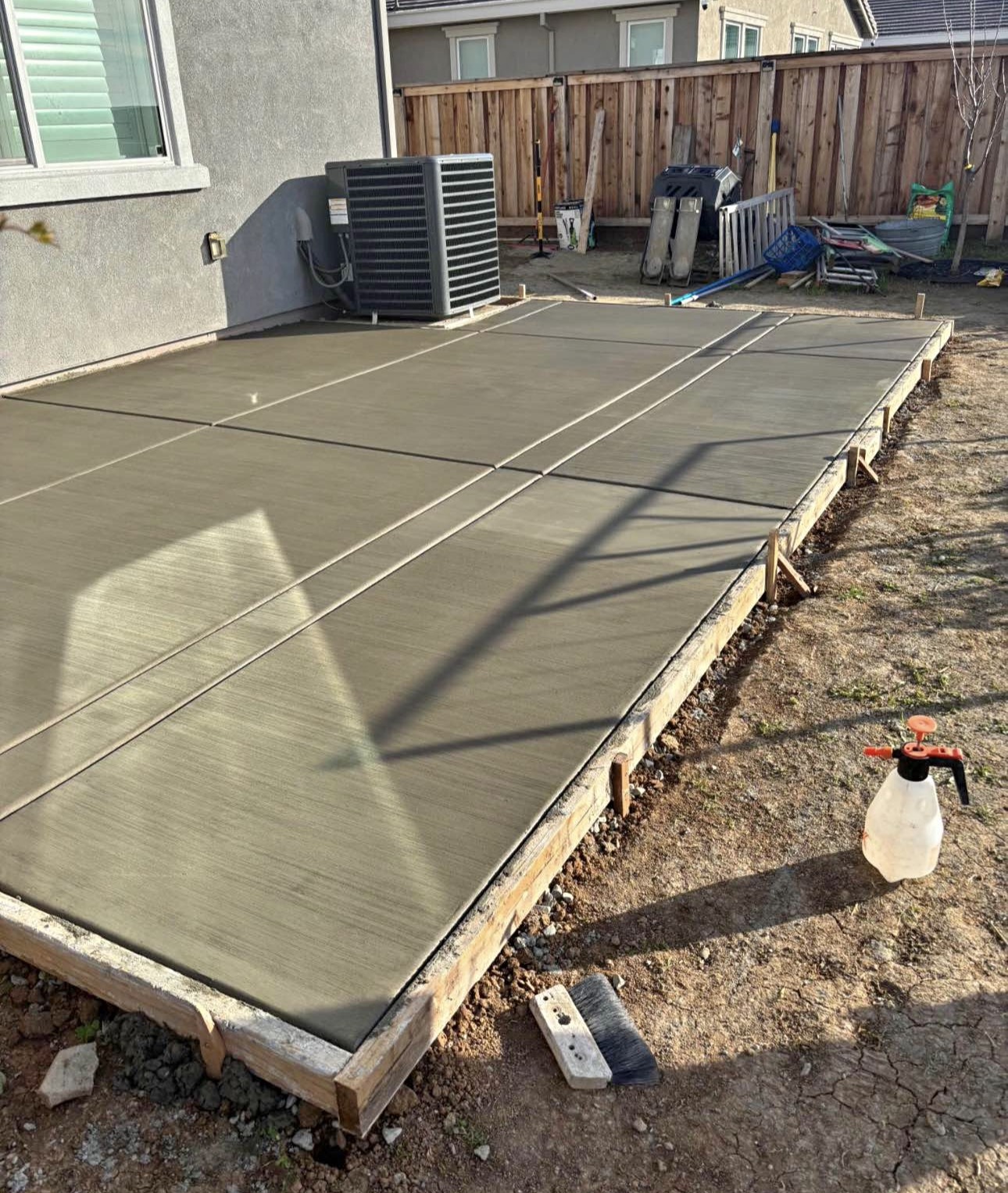
How North Texas Heat Affects the Cure
DFW summers are genuinely tough on fresh concrete. When temperatures push above 90°F — which happens most days from June through September — the water in the mix can evaporate too quickly. When that happens, hydration slows or stalls, which can result in surface cracking, reduced strength, or a chalky, weak surface layer called dusting.
Good contractors in this market plan around the heat. That usually means scheduling pours for early morning before temperatures peak, using temporary shading over the fresh slab, and misting or covering the surface to slow moisture loss. If a contractor doesn't have a hot-weather protocol, that's worth asking about before you hire them.
When Can You Walk on Your New Slab?
The short answer: 24 to 48 hours minimum. That means normal footsteps — no dragging furniture, no wheelbarrows, nothing heavy or concentrated. Kids and pets should be kept off for at least two to three days. Pet nails and children's shoes can mark a surface that looks firm but hasn't fully locked in underneath.
In summer heat, err toward the longer end of that window. What looks cured on the surface may still be relatively soft a few inches down, especially in the first day after a pour during a heat wave.
When Can You Drive on It?
Standard passenger vehicles — cars and light SUVs — should stay off new concrete for a minimum of seven days. Heavier vehicles like full-size trucks, trailers, RVs, or anything over 5,000 pounds should wait at least two weeks, and ideally the full 28 days. Driving on concrete before it's ready doesn't just scratch the surface — it can cause structural damage below the surface that shows up later as cracking or settlement.
If your new driveway is your only access point, plan for parking on the street during that window. A week of inconvenience is a far better outcome than a cracked slab six months in.
What Helps Concrete Cure Right
Moisture is the most important factor in the first several days. The slab needs to stay consistently damp — not soaking wet, but not drying out either. Depending on conditions, your contractor may apply a liquid curing compound to the surface, cover it with plastic sheeting, or recommend wet-curing by misting it down in the morning and evening for the first week. In summer, keeping the slab out of direct afternoon sun makes a real difference.
What works against a good cure: sealing the slab too soon after the pour, letting it dry completely in the first 48 hours, or putting weight on it before it's ready. Give your concrete the time it needs, and you'll have a slab that holds up for decades without issue.